Copper Products
- Home
- /
- Copper Products


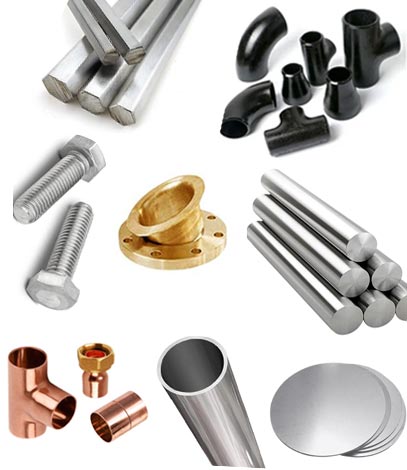
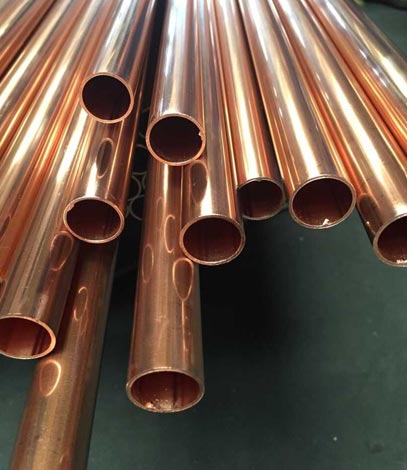
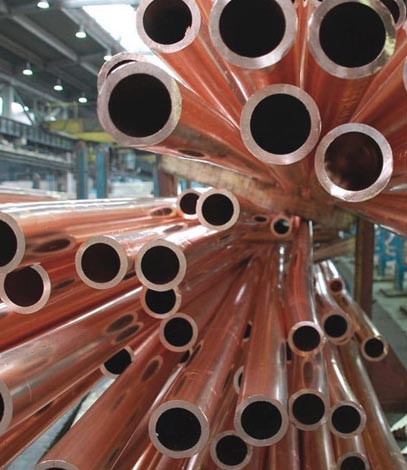
Copper pipes are widely used in plumbing and HVAC systems due to their durability, corrosion resistance, and excellent thermal conductivity. These pipes come in various grades and types, including Type K, L, M, and DWV, which differ by wall thickness and application. Copper piping can be easily joined through soldering, brazing, or mechanical fittings. It's ideal for potable water, gas systems, and refrigeration due to its non-toxic, long-lasting nature.
| Parameter | Description |
|---|---|
| Material | Copper (min. 99.9% pure) |
| Grade | ASTM B88 (Types K, L, M), ASTM B280 (Refrigeration), C12200 (common alloy) |
| Types | Type K (heaviest wall), Type L (medium), Type M (light), DWV (Drain-Waste-Vent) |
| Outer Diameter (OD) | 1/4" to 8" (6 mm to 203 mm) |
| Wall Thickness | Varies by type (Type K > Type L > Type M) |
| Standard Length | 10 ft and 20 ft (3 m and 6 m) |
| Joining Methods | Soldering, brazing, press-fit, compression fittings |
| Pressure Rating | Up to 1,200 psi (varies by size and type) |
| Temperature Range | -196°C to 400°C (-321°F to 752°F) |
| Standards | ASTM B88, B280, NSF/ANSI 61 |
| Applications | Plumbing, HVAC, medical gas systems, refrigeration |
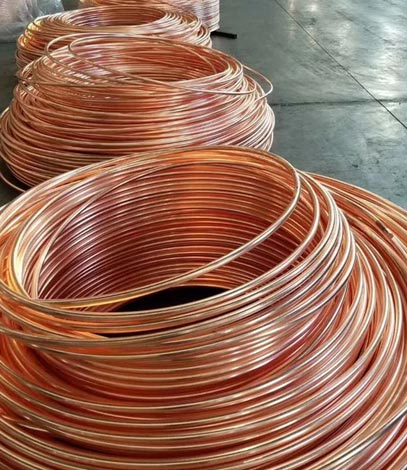
Copper tube coils are continuous lengths of copper tubing wound into a coil shape, designed for flexible and efficient installation in plumbing, HVAC, refrigeration, and gas distribution systems. Their coiled form allows for fewer fittings and joints, reducing the potential for leaks and simplifying layout in confined or irregular spaces. These tubes are known for their high thermal conductivity, corrosion resistance, and workability. Available in soft (annealed) and hard tempers, copper tube coils conform to international standards such as ASTM B280 and B68, ensuring compatibility with a wide range of applications in both residential and industrial settings.
| Parameter | Description |
|---|---|
| Material | High-purity Copper (typically ≥ 99.9%) |
| Grade | ASTM B280 (Refrigeration), ASTM B68, C12200 (DHP Copper) |
| Temper | Soft (annealed) or Hard drawn |
| Form | Coiled (annealed for flexibility) |
| Outer Diameter (OD) | 1/8" to 1-5/8" (3.18 mm to 41.28 mm) |
| Wall Thickness | Standard or Custom per ASTM standards |
| Coil Length | Typically 15 m to 50 m (can vary by supplier) |
| Pressure Rating | Up to 700 psi (depends on size and type) |
| Temperature Range | -100°C to 400°C (-148°F to 752°F) |
| Standards | ASTM B280, ASTM B68, EN 12735-1, RoHS compliant |
| Applications | HVAC, refrigeration, gas lines, water distribution, solar systems |
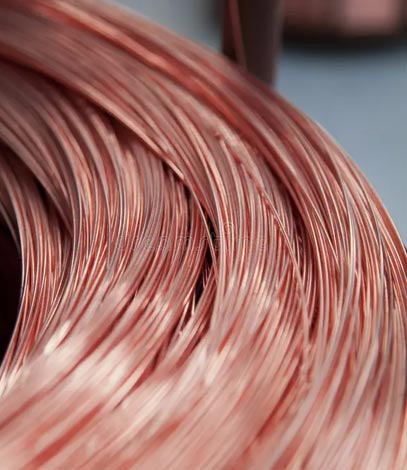
Copper wire is one of the most widely used conductors in electrical and electronic applications due to its exceptional conductivity, malleability, and corrosion resistance. It is used in power generation, transmission, telecommunications, electronics, and electrical wiring systems. Copper wires are available in various forms including solid, stranded, bare, and insulated, and conform to standards such as ASTM B3, B8, and B170. The wire is manufactured in a variety of grades and sizes to suit diverse industrial, residential, and commercial needs.
| Parameter | Description |
|---|---|
| Material | High-Conductivity Copper (≥ 99.9% Cu) |
| Grade | ASTM B3 (soft/annealed), ASTM B8 (stranded), ASTM B170, C11000 (Electrolytic Tough Pitch) |
| Type | Solid, Stranded, Bare, Tinned, or Insulated |
| Size Range | 30 AWG to 500 MCM (0.05 mm² to 250 mm²) |
| Conductivity | Up to 101% IACS (International Annealed Copper Standard) |
| Insulation (if applicable) | PVC, XLPE, Teflon, PE, Rubber, etc. |
| Temperature Rating | -65°C to 200°C (based on insulation type) |
| Voltage Rating | 300V to 35kV (depending on application) |
| Standard Length | 100 m, 500 m, 1000 m rolls or custom |
| Standards | ASTM B3, B8, B170, IEC 60228, UL, RoHS |
| Applications | Power distribution, motors, transformers, electronics, telecom, and building wiring |
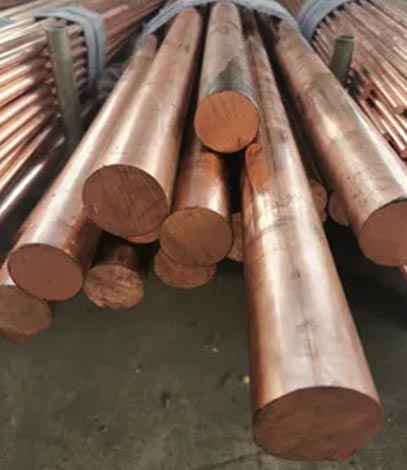
Copper rods are solid cylindrical bars of copper used extensively in electrical, construction, and industrial applications due to their excellent conductivity, strength, and resistance to corrosion. These rods are commonly manufactured through continuous casting and rolling, and are often used as raw material for wire drawing, earthing systems, electrodes, and machined components. Available in various grades and diameters, copper rods are produced in both electrical (ETP) and oxygen-free (OFHC) varieties to meet specific technical and performance standards.
| Parameter | Description |
|---|---|
| Material | Pure Copper (≥ 99.9%) |
| Grade | C11000 (ETP), C10200 (OFHC), C10100 (OFE) |
| Diameter Range | 8 mm to 160 mm (or custom sizes) |
| Length | 1 m to 6 m standard; custom lengths available |
| Temper | Hard, Half Hard, Annealed |
| Conductivity | ≥ 100% IACS for ETP grade |
| Manufacturing Process | Continuous Cast, Rolled, or Extruded |
| Surface Finish | Bright, Smooth, or Oxidized (upon request) |
| Standards | ASTM B187, ASTM B170, EN 13601, IEC 60439 |
| Applications | Electrical busbars, grounding rods, wire drawing, machined parts, transformers |
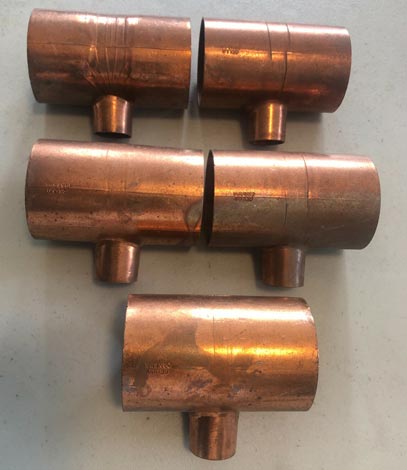
Copper fittings are essential components in piping systems used to connect, redirect, or terminate copper tubing in plumbing, HVAC, gas distribution, and refrigeration applications. They offer superior corrosion resistance, high thermal conductivity, and ease of installation through soldering, brazing, or press-fitting. Copper fittings are available in various types such as elbows, tees, couplings, reducers, and end caps, and are manufactured in both wrought and cast forms. These fittings are designed to comply with global standards such as ASME B16.22 and ASTM B75, ensuring compatibility and long-term reliability in fluid systems.
| Parameter | Description |
|---|---|
| Material | High-grade Copper (≥ 99.9%) |
| Grade | ASTM B75 (C12200 – DHP Copper), ASTM B62 (for cast fittings) |
| Types | Elbows, Tees, Couplings, Reducers, End Caps, Adapters, Bushings |
| Sizes | 1/4" to 6" (DN6 to DN150) |
| Connection Methods | Soldered, Brazed, Press-fit, Compression |
| Pressure Rating | Up to 700 psi (varies by size and connection method) |
| Temperature Range | -20°C to 200°C (or higher for brazed joints) |
| Manufacturing Forms | Wrought (formed) and Cast (machined) |
| Standards | ASME B16.22, ASTM B75, B88, B62, NSF/ANSI 61 |
| Applications | Plumbing, HVAC, medical gas, refrigeration, fire protection systems |
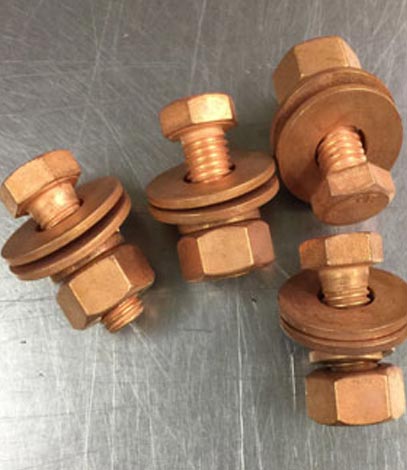
Copper fasteners are mechanical components made from high-purity copper or copper alloys and are commonly used in electrical, marine, architectural, and chemical environments due to their excellent conductivity, corrosion resistance, and non-magnetic properties. These fasteners include bolts, nuts, screws, washers, and rivets, and are ideal for joining conductive materials in grounding and bonding applications. Copper fasteners are also preferred in aesthetic or decorative applications because of their distinctive appearance and natural patina over time. They meet industrial standards for both mechanical strength and electrical performance.
| Parameter | Description |
|---|---|
| Material | Pure Copper (≥ 99.9%) or Copper Alloys (e.g., Brass, Bronze) |
| Grade | C11000 (ETP Copper), C10100 (OFE), C26000 (Brass), C95400 (Aluminum Bronze) |
| Types | Bolt, Nut, Washer, Screw, Rivet, Stud |
| Thread Standards | UNC, UNF, Metric (DIN, ISO) |
| Sizes | M2 to M24 or 1/8” to 1” (custom sizes available) |
| Surface Finish | Natural, Polished, Tinned, or Plated (Nickel/Silver) |
| Corrosion Resistance | Excellent – suitable for marine and humid environments |
| Conductivity | High electrical and thermal conductivity (especially pure copper) |
| Standards | ASTM B16, B99, DIN 934, ISO 4032, RoHS compliant |
| Applications | Electrical panels, grounding systems, marine hardware, decorative structures, chemical plants |
Copper 90/10, also known as Cupronickel 90/10, is an alloy composed of 90% copper and 10% nickel, with small additions of iron and manganese to enhance its strength and corrosion resistance. It is widely used in marine and offshore applications due to its excellent resistance to seawater, biofouling, and stress corrosion cracking. Copper 90/10 is also known for its good fabricability, weldability, and thermal stability, making it ideal for heat exchangers, condenser tubes, desalination plants, and shipbuilding. This alloy complies with international standards like ASTM B466 and B111.
| Parameter | Description |
|---|---|
| Material | Copper-Nickel Alloy (Cu-Ni 90/10) |
| Composition | 90% Copper, 10% Nickel, with trace Iron and Manganese |
| Grade | C70600 (UNS designation), CN102 (BS), CuNi10Fe1Mn |
| Form | Pipe, Tube, Plate, Sheet, Rod, Flange, Fittings |
| Standards | ASTM B466, B467, B111, B122, EN 12451, BS 2871 |
| Density | 8.94 g/cm³ |
| Melting Point | Approx. 1100°C (2012°F) |
| Thermal Conductivity | 50 W/m·K (lower than pure copper due to nickel content) |
| Corrosion Resistance | Excellent in seawater and saline environments |
| Tensile Strength | 200 – 350 MPa (depending on form and temper) |
| Applications | Heat exchangers, condenser tubes, marine piping, desalination systems, offshore platforms |
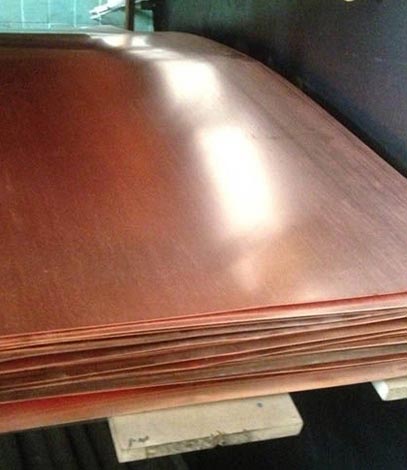
Copper 70/30, also known as Cupronickel 70/30, is an alloy composed of 70% copper and 30% nickel. It offers superior corrosion resistance, especially against seawater and acidic environments, making it ideal for marine engineering, desalination plants, and heat exchangers. This alloy also contains small amounts of iron and manganese to improve strength and resistance to biofouling. Copper 70/30 is renowned for its excellent thermal conductivity, weldability, and toughness, complying with standards such as ASTM B466 and BS EN 12451.
| Parameter | Description |
|---|---|
| Material | Copper-Nickel Alloy (Cu-Ni 70/30) |
| Composition | 70% Copper, 30% Nickel, with trace Iron and Manganese |
| Grade | C71500 (UNS designation), CN70/30 (BS), CuNi30Fe1Mn |
| Form | Pipe, Tube, Plate, Sheet, Rod, Flange, Fittings |
| Standards | ASTM B466, B467, B111, B122, EN 12451, BS 2871 |
| Density | 8.94 g/cm³ |
| Melting Point | Approx. 1170°C (2138°F) |
| Thermal Conductivity | 39 W/m·K (lower than 90/10 due to higher nickel content) |
| Corrosion Resistance | Excellent in seawater, acidic, and oxidizing environments |
| Tensile Strength | 300 – 450 MPa (varies with temper and form) |
| Applications | Marine piping, desalination plants, heat exchangers, offshore platforms, chemical processing |
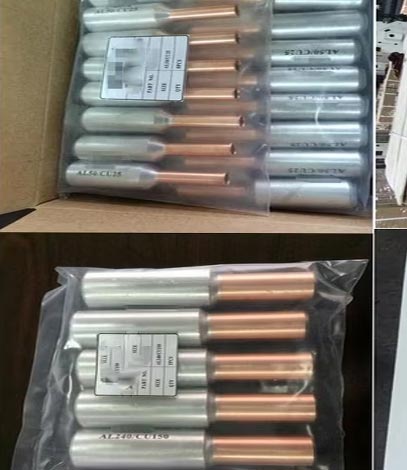
Copper bimetal products consist of two different metals bonded together, typically combining copper’s excellent electrical conductivity and corrosion resistance with the mechanical strength or cost-effectiveness of another metal such as steel or aluminum. These materials are widely used in electrical connectors, busbars, heat exchangers, and automotive parts, where optimized performance and durability are essential. The copper layer ensures superior conductivity and corrosion protection, while the base metal provides structural support.
| Parameter | Description |
|---|---|
| Composition | Copper bonded with steel, aluminum, or other metals |
| Types | Copper-Steel, Copper-Aluminum, Copper-Brass Bimetals |
| Bonding Methods | Explosive welding, Cladding, Roll bonding, Soldering |
| Thickness | Copper layer thickness varies typically from 0.1 mm to several millimeters |
| Applications | Electrical connectors, busbars, heat exchangers, automotive components, grounding systems |
| Standards | ASTM B859, ASTM B898, ISO 1765 |
| Advantages | High conductivity, corrosion resistance, mechanical strength, cost-effective |
| Typical Thickness Range | 0.1 mm – 5 mm (varies by application) |
| Mechanical Properties | Depends on base metal; copper layer provides conductivity |
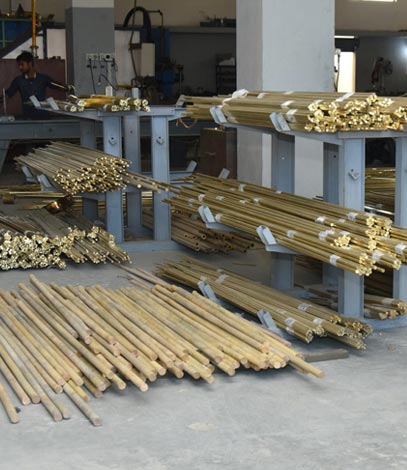
Brass rods are cylindrical bars made from copper-zinc alloys, renowned for their excellent machinability, corrosion resistance, and attractive golden appearance. These rods are widely used in manufacturing, plumbing, electrical components, and decorative applications. Available in various grades and dimensions, brass rods can be easily fabricated into precision parts for automotive, marine, and industrial sectors. Their strength and ductility make them suitable for both structural and aesthetic uses.
| Parameter | Description |
|---|---|
| Material | Copper-Zinc Alloy |
| Common Grades | CuZn37 (H59), CuZn39Pb3 (H62), CuZn40Pb2 (H63) |
| Diameter Range | 6 mm to 200 mm (custom sizes available) |
| Length | 1 m to 6 m standard lengths |
| Temper | Hot Rolled, Cold Drawn, Annealed |
| Mechanical Properties | Good strength and ductility, machinable |
| Corrosion Resistance | Good resistance to atmospheric and seawater corrosion |
| Applications | Machinery parts, plumbing fixtures, electrical terminals, decorative hardware |
| Standards | ASTM B16, EN 12165, JIS H3250 |
| Shape | Metric Size Range | Imperial Size Range |
|---|---|---|
| Round | Diameter 6 to 125 mm | Diameter 0.25 (1/4) to 5 inches |
| Hexagon | A/F 6 to 90 mm | A/F 0.25 (1/4) to 3.50 (3 1/2) inches |
| Square | A/F 6 to 80 mm | A/F 0.25 (1/4) to 3.15 (3 5/32) inches |
| Rectangle | Thickness 3 to 50 mm Width 3 to 70 mm |
Thickness 0.12 (1/8) to 2.00 (2) inches Width 0.12 (1/8) to 2.75 (2 3/4) inches |