Brass & Bronze Metal Alloys
- Home
- /
- Brass & Bronze Metal Alloys


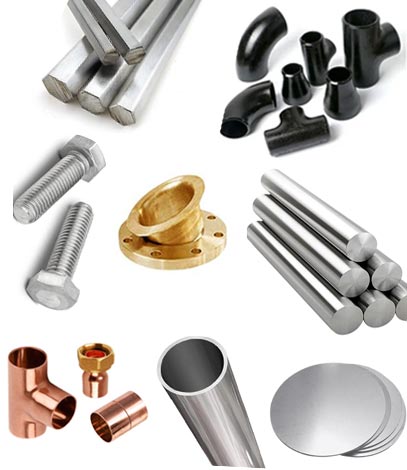
Brass is essentially copper alloyed with zinc. It is strong but easy to form, stamp or draw which make it a common choice for a broad spectrum of applications. By varying the amount of zinc content it is possible to achieve a variety of characteristics including different levels of corrosion resistance, ductility and suitability for machining.
| Property | Specification |
|---|---|
| Material Name | Free Machining Brass |
| Common Grades | C36000, C3601, CW603N |
| Composition | Copper: ~60-63%, Zinc: ~35-37%, Lead: ~2.5-3.7% |
| Form | Round Bars, Hex Bars, Square Bars, Rods |
| Standards | ASTM B16 / B16M, UNS C36000, EN CW603N |
| Density | 8.49 g/cm³ |
| Melting Point | 875 – 895°C (approx.) |
| Tensile Strength | Approximately 345 MPa |
| Yield Strength | Approximately 103 MPa |
| Elongation | ~25% in 50 mm |
| Machinability | 100% (Excellent – reference standard) |
| Corrosion Resistance | Good in normal atmospheric conditions |
| Applications | Precision components, plumbing fittings, valves, electrical connectors |
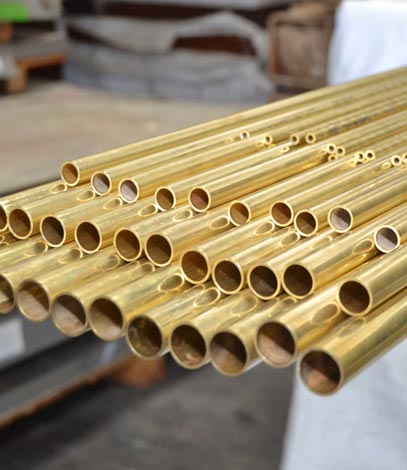
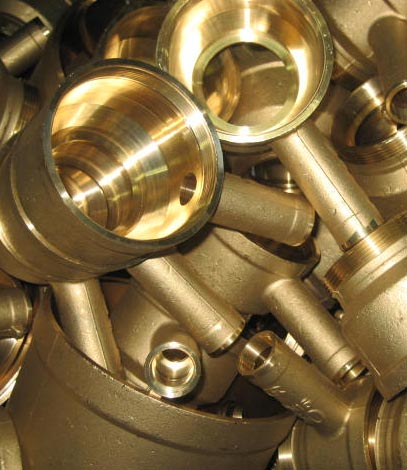
Forging Brass is an alloy of copper and Zinc, in properties which can be varied to achieve varying mechanical and electrical properties. It is a substitution alloy: atoms of the two constituents may replace each other within the same crystal structure. Forging brass can be easily shaped. Forging brass has high thermal conductivity and have excellent hot forgeability properties. They are available in the form of rod.
| Property | Specification |
|---|---|
| Material Name | Forging Brass |
| Common Grades | C37700, C37000, CW617N |
| Composition | Copper: ~58-61%, Zinc: ~35-40%, Lead: ~1.5-3% |
| Form | Rods, Bars, Billets for Forging |
| Standards | ASTM B124, UNS C37700, EN CW617N |
| Density | 8.47 g/cm³ |
| Melting Point | 885 – 900°C |
| Tensile Strength | ~350–500 MPa (depending on condition) |
| Yield Strength | ~125 MPa (typical) |
| Elongation | ~25% (in 50 mm) |
| Machinability | Good (~80–85%) |
| Forging Temperature Range | 700°C – 850°C |
| Corrosion Resistance | Good in neutral and slightly acidic environments |
| Applications | Hot forged plumbing parts, fittings, valves, industrial components |
Naval brass is the classic marine, high-strength and corrosion-resistant alloy containing 60 percent copper, .75 percent tin and 39.2 percent zinc. The addition of Tin also gives Naval Brass a high resistance to dezincification. It is widely used in marine construction where strong, corrosive-resistant and hard material is required and is suitable for both salt and fresh water applications. Naval Brasses have good strength and rigidity. The alloys are noted for their resistance to wear, fatigue and stress corrosion cracking.
| Property | Specification |
|---|---|
| Material Name | Naval Brass |
| Common Grades | C46400, C46200, CW712R |
| Composition | Copper: ~59%, Zinc: ~40%, Tin: ~1% |
| Form | Plates, Sheets, Rods, Bars |
| Standards | ASTM B21, ASTM B171, UNS C46400, EN CW712R |
| Density | 8.44 g/cm³ |
| Melting Point | 900 – 940°C |
| Tensile Strength | ~345–550 MPa (depending on temper) |
| Yield Strength | ~165 MPa |
| Elongation | ~25–35% |
| Machinability | 30–40% |
| Corrosion Resistance | Excellent, especially in marine and saltwater environments |
| Key Properties | High strength, good corrosion resistance, excellent hot formability |
| Applications | Marine hardware, shipbuilding, propeller shafts, condenser tubes |
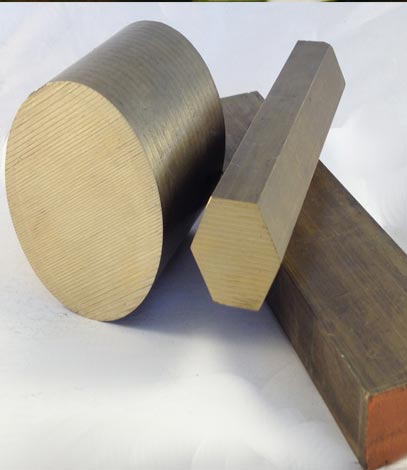
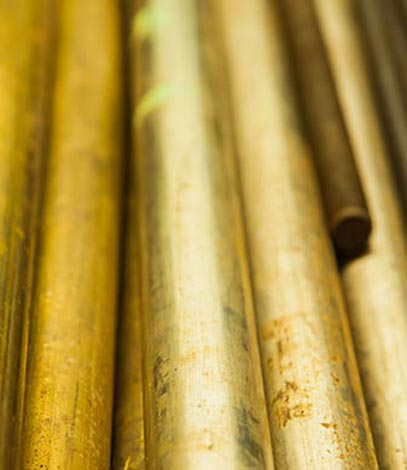
Lead increases the machinability of brass as well as increasing its strength and resistance to corrosion. The addition of lead also seals shrinkage pores to provide pressure tightness. Brasses can contain up to 3.5 percent in lead contents, and are classified as low, medium, or high-leaded. Leaded brass may be used to make screws, valves, fittings, bearings, specialty fasteners, architectural hardware, and general purpose machine parts.
| Property | Specification |
|---|---|
| Material Name | Leaded Brass |
| Common Grades | C35300, C34500, CW614N, CW617N |
| Composition | Copper: ~55–65%, Zinc: balance, Lead: ~1.5–3.5% |
| Form | Rods, Bars, Profiles, Hollow Sections |
| Standards | ASTM B121, B124, B453; EN 12164, 12165, 12167 |
| Density | 8.47 – 8.53 g/cm³ |
| Melting Point | 880 – 900°C |
| Tensile Strength | ~300–450 MPa (depending on condition) |
| Yield Strength | ~100–250 MPa |
| Elongation | ~15–30% |
| Machinability | 85–90% (Excellent) |
| Corrosion Resistance | Good in general atmospheric and freshwater environments |
| Key Properties | High machinability, good wear resistance, suitable for mass production |
| Applications | Automotive parts, plumbing fittings, precision machined components, hardware |
Lead free brass possess relatively good corrosion resistance, moderately high strength, and in some forms, it has very good ductility. Its hot forms are strong. It also called Muntz metal. It is available mainly in 60/40, 63/37, 65/35 & 70/30 Cu/Zn ratio. A ductile alloy is suitable for blanking, riveting, bending, hot forging & pressing.
| Property | Specification |
|---|---|
| Material Name | Lead-Free Brass |
| Common Grades | C69300, C87850, CW724R, ECOBRASS® |
| Composition | Copper: ~73–78%, Zinc: ~20–26%, Others (e.g. Bismuth, Silicon, Tin) |
| Form | Rods, Bars, Forgings, Castings |
| Standards | ASTM B371, ASTM B927, EN CW724R |
| Density | ~8.40–8.50 g/cm³ |
| Melting Point | 900 – 940°C |
| Tensile Strength | ~400–550 MPa |
| Yield Strength | ~200–300 MPa |
| Elongation | ~10–20% |
| Machinability | 70–80% (Good) |
| Corrosion Resistance | Excellent, including resistance to dezincification |
| Compliance | RoHS, REACH, NSF/ANSI 61 (drinking water safety) |
| Applications | Potable water fittings, valves, plumbing fixtures, eco-friendly hardware |
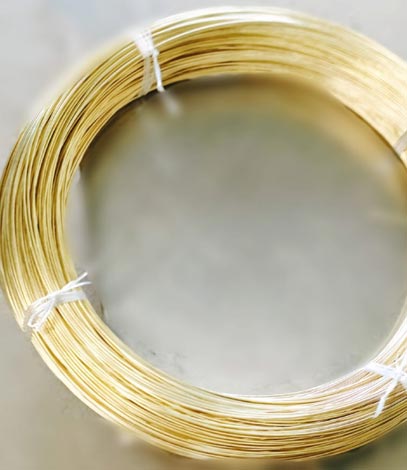
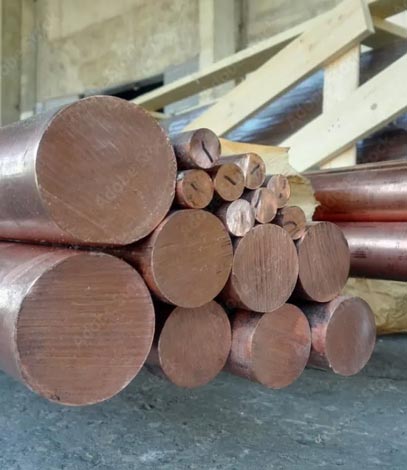
Silicon Red Brass is according to ELV and ROHS a lead-free special brass resisting high load and exhibiting good corrosion resistance as well as excellent machinability. This alloy is suited to the production of machined and drop forged parts. ECOBRASS is available as marching brass as well as in hot stamping quality. This material is also marketed under the designation CUPHIN for sanitary applications. The material meets the requirements of ISO 6509 regarding the dezincification resistance. Material accepted for products in contact with drinking water as per 4 MS positive list.
| Property | Specification |
|---|---|
| Material Name | Silicon Red Brass |
| Common Grades | C87500, C87600, C87800 |
| Composition | Copper: ~80–85%, Zinc: ~5–10%, Silicon: ~3–5%, Small amounts of Iron, Manganese |
| Form | Castings, Rods, Fittings |
| Standards | ASTM B584, ASTM B763 |
| Density | ~8.5 g/cm³ |
| Melting Point | 960 – 1020°C |
| Tensile Strength | ~310–480 MPa |
| Yield Strength | ~125–200 MPa |
| Elongation | ~10–20% |
| Machinability | Good (60–70%) |
| Corrosion Resistance | Excellent, especially in marine and brine environments |
| Key Properties | High strength, pressure tightness, excellent corrosion resistance |
| Applications | Valve components, water pump housings, plumbing fixtures, marine hardware |
Brass rods are cylindrical bars made from copper-zinc alloys, renowned for their excellent machinability, corrosion resistance, and attractive golden appearance. These rods are widely used in manufacturing, plumbing, electrical components, and decorative applications. Available in various grades and dimensions, brass rods can be easily fabricated into precision parts for automotive, marine, and industrial sectors. Their strength and ductility make them suitable for both structural and aesthetic uses.
| Parameter | Description |
|---|---|
| Material | Copper-Zinc Alloy |
| Common Grades | CuZn37 (H59), CuZn39Pb3 (H62), CuZn40Pb2 (H63) |
| Diameter Range | 6 mm to 200 mm (custom sizes available) |
| Length | 1 m to 6 m standard lengths |
| Temper | Hot Rolled, Cold Drawn, Annealed |
| Mechanical Properties | Good strength and ductility, machinable |
| Corrosion Resistance | Good resistance to atmospheric and seawater corrosion |
| Applications | Machinery parts, plumbing fixtures, electrical terminals, decorative hardware |
| Standards | ASTM B16, EN 12165, JIS H3250 |
| Shape | Metric Size Range | Imperial Size Range |
|---|---|---|
| Round | Diameter 6 to 125 mm | Diameter 0.25 (1/4) to 5 inches |
| Hexagon | A/F 6 to 90 mm | A/F 0.25 (1/4) to 3.50 (3 1/2) inches |
| Square | A/F 6 to 80 mm | A/F 0.25 (1/4) to 3.15 (3 5/32) inches |
| Rectangle | Thickness 3 to 50 mm Width 3 to 70 mm |
Thickness 0.12 (1/8) to 2.00 (2) inches Width 0.12 (1/8) to 2.75 (2 3/4) inches |
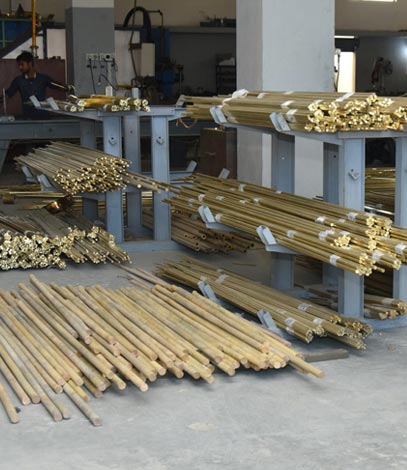
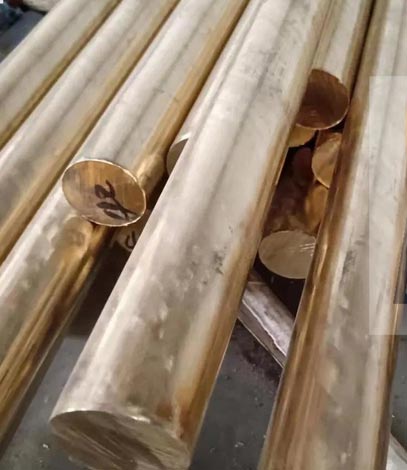
Manganese bronze contains small additions of manganese, iron, and aluminium, plus lead for lubricity, anti-seizing, and bonding. Like the aluminium bronzes, they combine high strength with excellent corrosion resistance. Manganese bronze bearings can operate at high speeds under heavy loads, but require high shaft hardness and nonabrasive operating conditions. The various types of manganese bronze are a popular choice for the aerospace, fastener, marine, and oil and gas Industries. Typical applications in these industries include landing gear parts, strut bushings, screw machine parts, bearings, bushings, gears, and lead screw nuts.
| Property | Specification |
|---|---|
| Material Name | Manganese Bronze |
| Common Grades | C86300, C86500, C86700 |
| Composition | Copper: ~60%, Zinc: ~20-25%, Iron: ~2-4%, Manganese: ~1-2.5%, Aluminum: ~5-7% |
| Form | Rods, Bars, Bushings, Gears, Castings |
| Standards | ASTM B505, ASTM B271, SAE J461 |
| Density | ~7.5 – 7.9 g/cm³ |
| Melting Point | 865 – 1025°C |
| Tensile Strength | ~620–860 MPa |
| Yield Strength | ~270–400 MPa |
| Elongation | ~10–20% |
| Machinability | 60–70% (Fair to Good) |
| Corrosion Resistance | Good (especially in marine and industrial environments) |
| Key Properties | High strength, wear resistance, good toughness, suitable for heavy-duty applications |
| Applications | Heavy-duty bearings, bushings, gears, marine hardware, valve parts, hydraulic systems |
The main function of leaded bronze group of alloys is to improve machinability. They are known for their resistance towards corrosion and abrasion and their long service life. Common applications include connectors for wire and cable, electrical plug type connectors, door knobs, screws and nuts, bushings for corrosion, rolling mill bearings, and many more.
| Property | Specification |
|---|---|
| Material Name | Leaded Bronze |
| Common Grades | C93200, C93700, C93900 |
| Composition | Copper: ~85-90%, Tin: ~5-10%, Lead: ~4-6%, Small amounts of Zinc, Iron |
| Form | Castings, Bars, Rods, Bushings |
| Standards | ASTM B505, ASTM B271 |
| Density | ~8.6 g/cm³ |
| Melting Point | 950 – 1050°C |
| Tensile Strength | ~300–500 MPa |
| Yield Strength | ~100–250 MPa |
| Elongation | ~15–25% |
| Machinability | Excellent (90–95%) |
| Corrosion Resistance | Good, especially in fresh water and some industrial environments |
| Key Properties | Excellent machinability, good wear resistance, self-lubricating due to lead content |
| Applications | Bearings, bushings, automotive parts, gear components, valve stems |
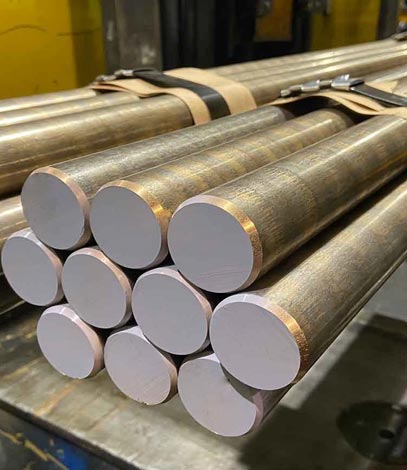
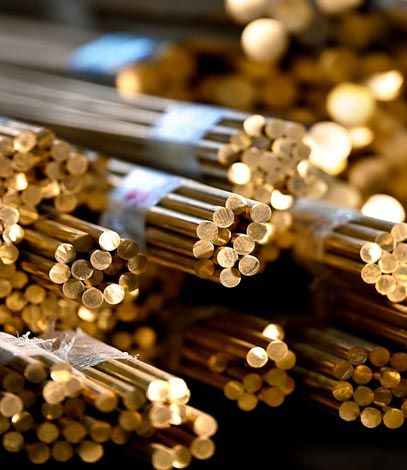
Silicon Red Brass is according to ELV and ROHS a lead-free special brass resisting high load and exhibiting good corrosion resistance as well as excellent machinability. This alloy is suited to the production of machined and drop forged parts. ECOBRASS is available as marching brass as well as in hot stamping quality. This material is also marketed under the designation CUPHIN for sanitary applications. The material meets the requirements of ISO 6509 regarding the dezincification resistance. Material accepted for products in contact with drinking water as per 4 MS positive list.
| Property | Specification |
|---|---|
| Material Type | Low Leaded Bronze |
| Composition | Cu + Sn + Pb |
| Copper (Cu) | 85.0% - 90.0% |
| Tin (Sn) | 5.0% - 7.0% |
| Lead (Pb) | 0.05% - 0.3% |
| Zinc (Zn) | Balance (if present) |
| Density | 8.7 - 8.9 g/cm³ |
| Melting Point | 900°C - 950°C |
| Hardness | Brinell 90 - 130 HB |
| Tensile Strength | 350 - 550 MPa |
| Yield Strength | 200 - 300 MPa |
| Applications | Marine, plumbing, electrical components, bearings |
The attractive golden hue of this metal makes it easy to understand how it received the name Jewellery Bronze. This beautiful brass can be buffed and lacquered to display its natural colour, or used as a base for gold plating. Its moderate strength, resistance to corrosion, electrical conductivity and ability to be deep drawn make C226 a great material option for many design engineers working on functional applications including hinges, doorknobs, and select electrical connectors.
| Property | Specification |
|---|---|
| Material Type | Non-Leaded Bronze |
| Composition | Cu + Sn |
| Copper (Cu) | 88.0% - 92.0% |
| Tin (Sn) | 8.0% - 10.0% |
| Zinc (Zn) | Balance (if present) |
| Lead (Pb) | 0% (Lead-Free) |
| Density | 8.6 - 8.9 g/cm³ |
| Melting Point | 900°C - 950°C |
| Hardness | Brinell 100 - 150 HB |
| Tensile Strength | 400 - 600 MPa |
| Yield Strength | 250 - 350 MPa |
| Applications | Marine, electrical, pump components, machinery |
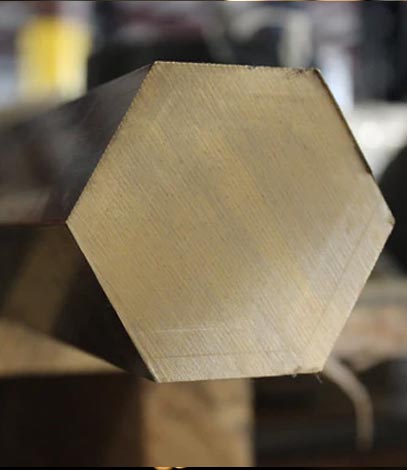
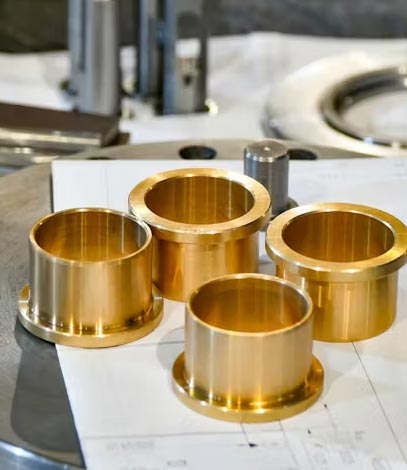
Bismuth Bronze ( C6802, C6804) is a copper alloy which typically contains 1-3% bismuth by weight.
| Property | Specification |
|---|---|
| Material Type | Bismuth Bronze |
| Composition | Cu + Sn + Bi |
| Copper (Cu) | 90.0% - 94.0% |
| Tin (Sn) | 4.0% - 6.0% |
| Bismuth (Bi) | 0.5% - 2.0% |
| Zinc (Zn) | Balance (if present) |
| Density | 8.5 - 8.9 g/cm³ |
| Melting Point | 850°C - 950°C |
| Hardness | Brinell 90 - 140 HB |
| Tensile Strength | 350 - 500 MPa |
| Yield Strength | 250 - 350 MPa |
| Applications | Bearings, bushings, valves, marine components |
| Benefits | Low friction, good corrosion resistance, lead-free |